Living in Katy, you probably think more about hurricane season and hail than you do about the shingles on your roof; that is, until you spot a water stain on the ceiling. Unfortunately, by the time water damage is visible, the problem has usually been building for a while. In our climate, roofs don't fail overnight. They wear down gradually through heat, sun, humidity, and storms.
A lot of homeowners only deal with their roof when there's obvious damage or an active leak. That's understandable, but it often leads to expensive emergency repairs and a replacement that comes sooner than it should. A roof in Katy takes a beating that roofs in milder climates just don't see. Once you know how our weather affects your roof throughout the year, a simple seasonal routine can help you stay ahead of problems before they get costly.
At Onit Roofing, we use materials from trusted brands like Owens Corning, CertainTeed, and Atlas because, every day, we see what this climate does to a roof, and we want to keep yours protected through every season.
How Katy's Weather Wears Down Your Roof
It's not just one thing… it's everything. Long stretches of heat and intense sun. Humid air that keeps your attic from drying out. Powerful thunderstorms off the Gulf. Hail. High winds. All of it, every year. Even if you never see missing shingles in the yard, your roof is working hard.
Asphalt shingles, which many homes in Katy have, are especially vulnerable to heat and UV exposure. Over time, the sun dries out the shingle material, protective oils evaporate, and the granules that shield the surface start to loosen. You might see them washing into your gutters. The daily cycle of heat expansion and nighttime cooling stresses nails and sealants, slowly opening small gaps around flashing and roof penetrations.
Storms create a different kind of wear. Strong winds catch the lower edges of shingles and break the adhesive seal. Once that seal goes, wind can lift the shingle further, rain can get underneath, and the wood below will start rotting. Heavy rain backed up by clogged gutters pushes water toward the roof edge and fascia. Inside the house, small leaks in Katy's humid climate can cause attic moisture and ceiling stains long before anything looks obviously wrong.
The idea that "no leak means no problem" doesn't hold up here. Most of the roof issues we find started as minor granule loss, a slightly lifted shingle, or a small flashing crack, aka things that are easy to miss from the ground. By the time water shows up on your ceiling, the repair is usually bigger than it needed to be.
Spring Maintenance = Prepping Your Roof for the Months Ahead
Spring in Katy brings some of our strongest thunderstorms. Driving rain, branches on the roof, and gusts that tug at shingles and flashing make for a rough season. This is also when any weak spots from winter show up. A focused spring routine helps your roof recover and sets it up for the long, hot summer ahead.
What Homeowners Can Do
A few things you can check yourself without getting on the roof:
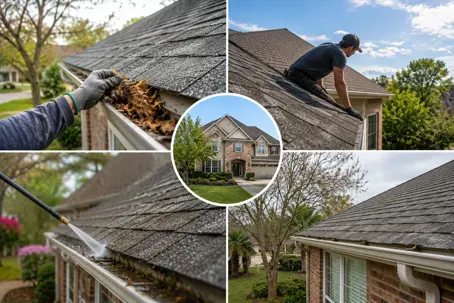
- After a storm, walk the perimeter of your house and look up. Missing or lifted shingles, exposed nail heads, and shingles that look crooked along the edges are worth noting. Binoculars help. Check your gutters for excess granules; a lot of granule loss is a sign of aging shingle. If you can safely access gutters with a short ladder, clear them out so spring rains drain properly.
- Inside, take a flashlight into the attic. Look for new water stains on the underside of the roof deck, damp insulation, or any daylight showing through where it shouldn't be. A musty smell is often the first sign of slow moisture buildup. These checks take just a few minutes and can catch problems before they reach your living space.
What Onit Roofing Can Do
A professional inspection goes beyond what you can see from the ground. When we visit a home in Katy, we check the penetrations (plumbing vents, chimneys, skylights, HVAC lines) because that's where flashing and sealants crack over time. We also look at valleys, roof-to-wall transitions, and edges where wind uplift is most likely to have broken shingle seals. In the attic, we check for moisture, ventilation issues, and any irregularities in the roof structure.
We start every visit with a free inspection and go over our findings with you, including photo documentation, so you know exactly what's going on and what, if anything, needs to happen next.
Summer Maintenance = Protecting Your Roof from Heat & UV
Weeks of high temperatures and relentless sun push roof surface temps well above the air temperature, making shingles more fragile and speeding up aging. Even without major storms, the damage from heat and UV alone can shorten the life of your roof if it's not managed.
Over time, intense sun dries out shingles and causes them to curl at the edges or look bare and faded. Heat also makes shingles soft underfoot, which is one reason we strongly advise against homeowners walking on their roofs in summer. You can damage shingles without realizing it, and the safety risk on a hot, soft surface is real.
Attic ventilation matters a lot this time of year. A poorly ventilated attic traps hot, humid air, which raises the temperature of your roof deck from below and makes your AC work harder. It can also lead to shingle blistering and early failure of the underlayment. Proper intake at the soffits and exhaust along the ridge keeps air moving and reduces heat buildup.
What Homeowners Can Do
From the ground, look for shingles that are curling or cupping, especially on south- and west-facing slopes.
Inside, notice if certain rooms feel hotter than they should, or if your attic is uncomfortably hot when you step in briefly.
Check that soffit vents aren't blocked by paint, debris, or insulation. These are signs your ventilation may need attention.
What Onit Roofing Can Do
When we inspect roofs in summer, we look closely at shingle condition, ventilation patterns, and any signs the roof is trapping heat and moisture. We can recommend targeted fixes, like adding vents, correcting insulation, or planning ahead for a shingle upgrade when the roof is getting close to the end of its life.
Fall Maintenance = Clearing Debris & Shoring Up Before Winter Rains
Fall in the Houston area brings a mix of lingering heat, strong thunderstorms, and the start of cooler fronts. Leaves and small branches land on roofs and clog gutters. Temperature swings continue to stress sealants and flashing. This is the time to clean things up, address any weak spots, and make sure your roof is ready for heavier winter rain.
What Homeowners Can Do
Debris is the biggest concern in fall. Leaves and twigs collect in valleys, behind chimneys, and in gutters. When they sit, they trap moisture against shingles and block drainage. Standing water in low spots finds its way into seams.
From the ground or a short ladder, check whether your gutters are packed and whether valleys look clogged. Keeping them clear makes a real difference.
Fall is also a good time to look around chimneys, skylights, and roof-to-wall intersections from the ground. Obvious gaps, lifted flashing, or dried-out caulking should be flagged. Those spots may not leak every time it rains, but during a long, wind-driven fall storm they can let in water. Inside, check the attic and top-floor ceilings for any new stains after major rain events.
What Onit Roofing Can Do
When we do an inspection in the fall, we look at the details that are easy to miss from the yard:
- flashing condition in valleys and around penetrations
- sealant that has pulled away
- small punctures or hail bruises from the summer that went unnoticed
These small issues turn into winter leaks if they're not caught and corrected early.
Winter Maintenance = Staying Alert
Katy doesn't get heavy snow or ice, so it's easy to assume winter is a slow season for your roof. But our winters bring steady rain, cold fronts, and occasional freezes that test every weak spot. Winter doesn't usually create new problems; it reveals the ones heat and storms have been building throughout the year.
When storms roll through, rain can be steady and wind-driven for hours. Water works its way into any gap around flashing, vent boots, or roof edges. Clogged gutters or rotting fascia can send water spilling down your siding. Inside, you might notice new ceiling stains near exterior walls or drips around light fixtures after a heavy rain.
What Homeowners Can Do
For winter maintenance, focus on monitoring. After a significant rain, walk through your top floor and look at the ceilings, especially in corners, near roof penetrations like vent fans and skylights, and in closets or rooms you don't use often.
In the attic, look for fresh water marks, damp insulation, or a musty smell.
What Onit Roofing Can Do
Winter is a practical time to take care of repairs that aren't urgent. Our crew can usually work in mild winter conditions, and scheduling tends to be more flexible outside of peak storm season.
If a spring or fall inspection flagged something you decided to hold off on, winter is a good window to get it done before the next round of severe weather.
Seasonal Maintenance Can Save You Money
Catching small problems early is almost always cheaper than fixing them after they've had time to grow. A lifted shingle or a minor flashing gap is a straightforward repair when caught on a seasonal checkup. Left alone through a few more storm seasons, that same issue can wet the roof deck, saturate insulation, stain ceilings, and, in worst case scenarios, lead to mold or structural damage.
Think about a cracked plumbing vent boot. It cracks in summer from sun exposure. In fall, wind-driven rain starts seeping in. By winter, the wood underneath is soft, and a stain appears on a bedroom ceiling. Catch it at the seasonal inspection stage, and you're probably replacing a vent boot and a small section of decking. Miss it for another year or two, and the repair extends to larger sections of deck, drywall, and possibly more.
Regular inspections also give you a record of your roof's condition over time. That record helps you plan ahead for eventual replacement instead of being blindsided by a sudden failure. When you know your roof is fifteen years old and showing signs of aging, you can budget and have a real conversation with a roofer well before it becomes an emergency.
At Onit Roofing, we offer financing and payment plans so that when an inspection reveals necessary work, you have options to move forward without putting everything on hold.
When to Call in the Professionals
Even with a solid seasonal routine, some things call for a professional. Visible warning signs include missing or slipped shingles, repeated ceiling stains in the same spot, heavy granule loss, and any sign of sagging. Age matters too. If your roof is more than ten years old and hasn't had a professional inspection in a few years, it's worth scheduling one.
The schedule that we’ve found works well for most homeowners: a professional inspection once a year, either in spring or fall, plus a call after any major hail or wind event in your area.
At Onit Roofing, we start every visit with a free, no-obligation inspection. We walk you through what we find, help you prioritize anything that needs attention, and do a final walkthrough with you when the work is done.
If you've noticed any of the warning signs mentioned here—or it's just been a while since a professional has looked at your roof—reach out and we'll take it from there. You can contact us on through our online form or at (346) 484-5122.